
China Continues Military Exercises with Live Fire in Taiwan Strait
The United States has strongly criticized China’s ongoing military drills near Taiwan, stating that such actions pose a significant threat to regional security. The military exercises, which began on Tuesday without prior notice, involved large-scale maneuvers, including a simulated blockade and strike operations targeting Taiwan.
China’s Military Mobilization in Taiwan Strait
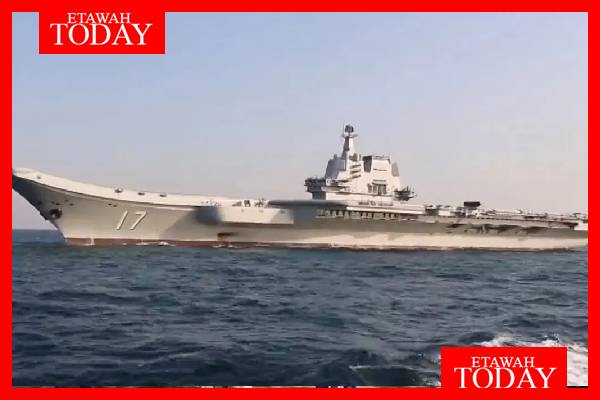
China’s People’s Liberation Army (PLA) launched the drills by deploying 76 aircraft and over 20 naval and coast guard vessels, including the formidable Shandong aircraft carrier group. On Wednesday, China announced an escalation in these operations, confirming that live fire would be used while targeting key ports and energy infrastructure around Taiwan.
In an official statement, the PLA outlined the objectives of these exercises:
- Identification and verification of enemy forces
- Warning and expulsion of potential threats
- Interception and detention of hostile entities
- Precision strikes on critical locations
These maneuvers, according to the Chinese military, are aimed at testing the forces’ capabilities for joint blockade and control, reinforcing their readiness for any future engagements.
US Response: ‘China’s Actions Destabilize the Region’
The US State Department has issued a firm response, reaffirming its commitment to Taiwan and its regional allies. Washington has condemned China’s aggressive military posturing, stating that such actions heighten tensions and disrupt peace in the Taiwan Strait.
“Once again, China’s aggressive military activities and rhetoric toward Taiwan only serve to exacerbate tensions and put the region’s security and the world’s prosperity at risk,” said a US spokesperson. “The United States supports peace and stability across the Taiwan Strait and opposes unilateral changes to the status quo, including through force or coercion.”
China’s Justification: Targeting ‘Separatist’ Activity in Taiwan
China maintains that the drills are a necessary response to what it calls “separatist” activities by Taiwan’s newly elected President Lai Ching-te. Recently, Lai’s administration introduced 17 measures aimed at countering China’s influence, including designating China as a hostile foreign force. Beijing has condemned these actions, viewing them as steps toward Taiwanese independence.
In a bold move, China named the military operation “Strait Thunder-2025A”, suggesting it is part of a series of planned exercises. Propaganda material accompanying the drills depicted Taiwan’s leadership in a negative light, with some visuals portraying President Lai as an insect being burned over a flame.
Taiwan’s Stance: Defiance Against Growing Aggression
Despite Beijing’s pressure, Taiwan’s government and people remain firmly against Chinese rule. While Taiwan’s major political parties, including the ruling Democratic Progressive Party (DPP) and the opposition Kuomintang (KMT), differ in their approach to cross-strait relations, both oppose CCP governance over the island.
Analysts suggest that while China may not currently possess the military capability for a full-scale invasion of Taiwan, it continues to exert economic, cyber, and military pressure as part of its long-term strategy.
Shipping Routes Closed Amid Rising Tensions
China’s Maritime Safety Administration declared restricted zones for civilian shipping during the exercises, extending to areas more than 500 km from Taiwan. However, Taiwanese defense officials clarified that these zones did not encroach upon their official response area.
As tensions escalate, global leaders continue to monitor the situation closely, with fears that an intensification of hostilities could disrupt peace and economic stability in the Indo-Pacific region. The US and its allies remain committed to safeguarding Taiwan’s sovereignty and regional stability in the face of growing Chinese assertiveness.